
About Total Knee Replacement
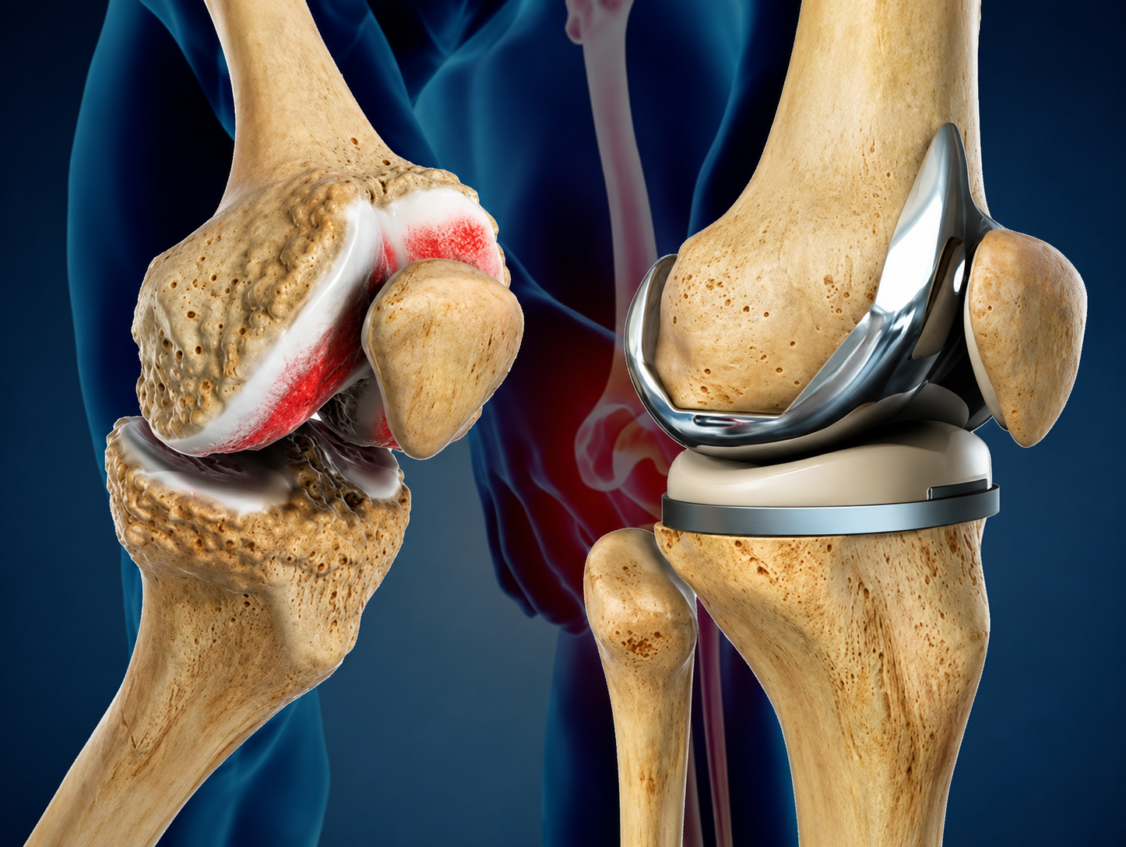
Total Knee Replacement (TKR), also known as Total Knee Arthroplasty, is a surgical procedure performed to relieve pain and improve function in people with severe knee arthritis or advanced joint damage. During the surgery, the damaged surfaces of the knee joint are replaced with specially designed artificial components that allow the joint to move more comfortably. The goal of knee replacement surgery is to reduce pain and improve quality of life. However, surgery alone does not restore normal strength, movement, or walking ability. Regaining these functions requires a structured rehabilitation programme guided by physiotherapy. Physiotherapy plays a vital role in helping individuals recover after surgery by restoring knee movement, rebuilding muscle strength, improving walking confidence, and supporting a safe return to daily activities such as climbing stairs, sitting, standing, and walking independently
Did You Know?
Frequently Asked Questions
Many people begin standing and walking with assistance within the first day after surgery, depending on their surgeon’s recommendations and overall medical condition.
Many people notice significant improvements within 6 to 12 weeks, although recovery continues for several months. Strength, endurance, and confidence often continue improving for up to a year after surgery.
Yes. Stair climbing is an important part of rehabilitation. Your physiotherapist will gradually teach you safe techniques while improving your strength and balance.
Yes. Some pain and swelling are expected during recovery. These symptoms generally improve gradually with healing, physiotherapy, and appropriate pain management.
A knee replacement often feels different from a natural knee. However, most people experience substantial pain relief and improved function, allowing them to comfortably perform everyday activities.