
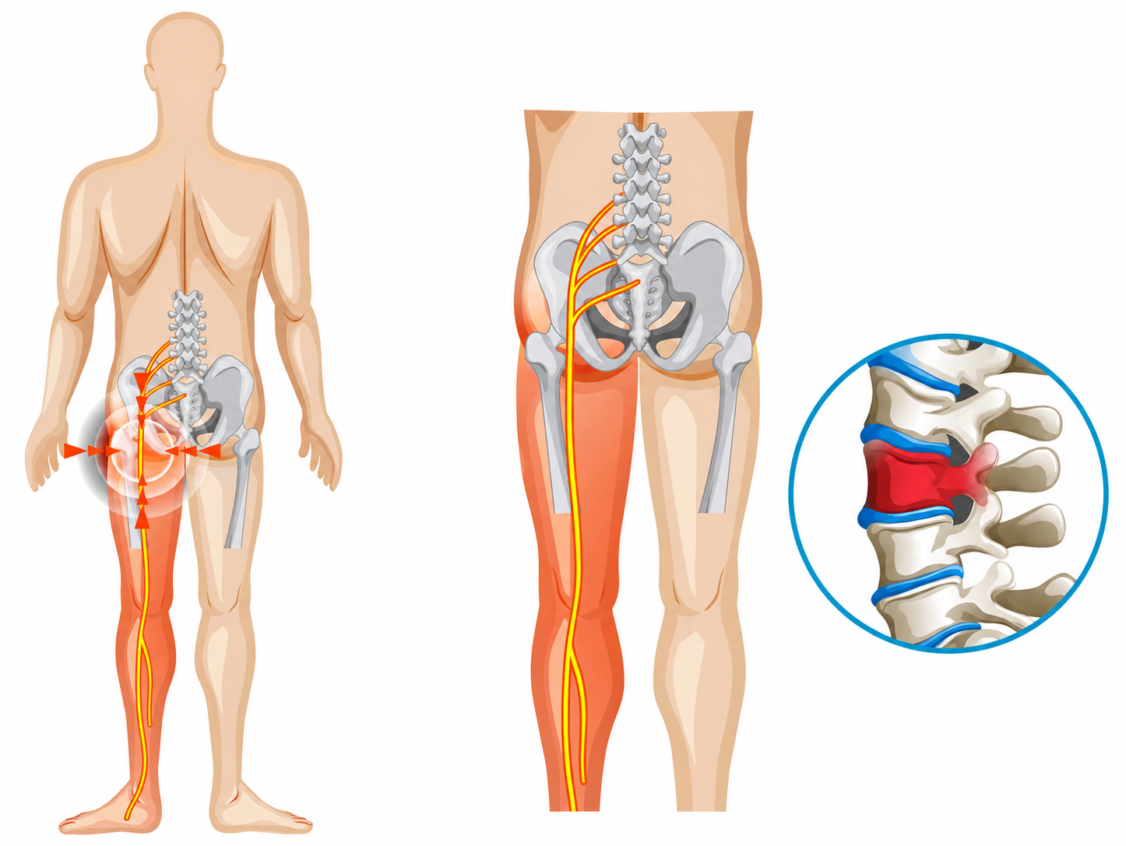
About Lumbar Radiculopathy (Sciatica)
Lumbar radiculopathy is a condition in which one or more nerve roots in the lower back (lumbar spine) become compressed, irritated, or inflamed. These nerve roots form the sciatic nerve and other nerves that travel through the hips, buttocks, legs, and feet. When a nerve root is affected, symptoms can extend beyond the lower back and travel along the course of the nerve. Many people refer to this condition as sciatica, although sciatica specifically describes the pain that radiates along the sciatic nerve rather than the underlying cause. Lumbar radiculopathy can result from a herniated (slipped) disc, age-related degeneration, spinal stenosis, or other conditions that reduce the space available for the nerve. The severity of symptoms varies from person to person. While some individuals experience mild discomfort, others may have significant pain or weakness. Fortunately, many people improve with conservative treatment, including physiotherapy, without requiring surgery.
Did You Know?
Most people with lumbar radiculopathy do not require surgery. Many cases improve with time, appropriate physiotherapy, and gradual return to activity. Surgery is usually reserved for individuals with severe or progressive neurological deficits, certain emergency conditions, or persistent symptoms that do not respond to adequate conservative treatment.
Frequently Asked Questions
Sciatica is a term commonly used to describe pain that travels along the sciatic nerve. Lumbar radiculopathy is the medical diagnosis describing irritation or compression of a nerve root in the lower back that may cause sciatica.
No. Many people with a herniated lumbar disc recover with conservative treatment, including physiotherapy, activity modification, and exercise. Surgery is considered only in selected cases.
Yes. Physiotherapy aims to reduce nerve irritation, improve movement, strengthen supporting muscles, and help restore normal function. Treatment is individualised based on your symptoms and examination findings.
The nerves supplying your legs originate from the lower back. When one of these nerve roots is compressed or irritated, pain may travel along the course of the nerve into the buttock, thigh, calf, or foot.
Prolonged bed rest is generally not recommended. Gentle movement and appropriately prescribed exercises usually support recovery better than complete inactivity. Your physiotherapist will guide you on safe activity levels.