About BELL’S PALSY
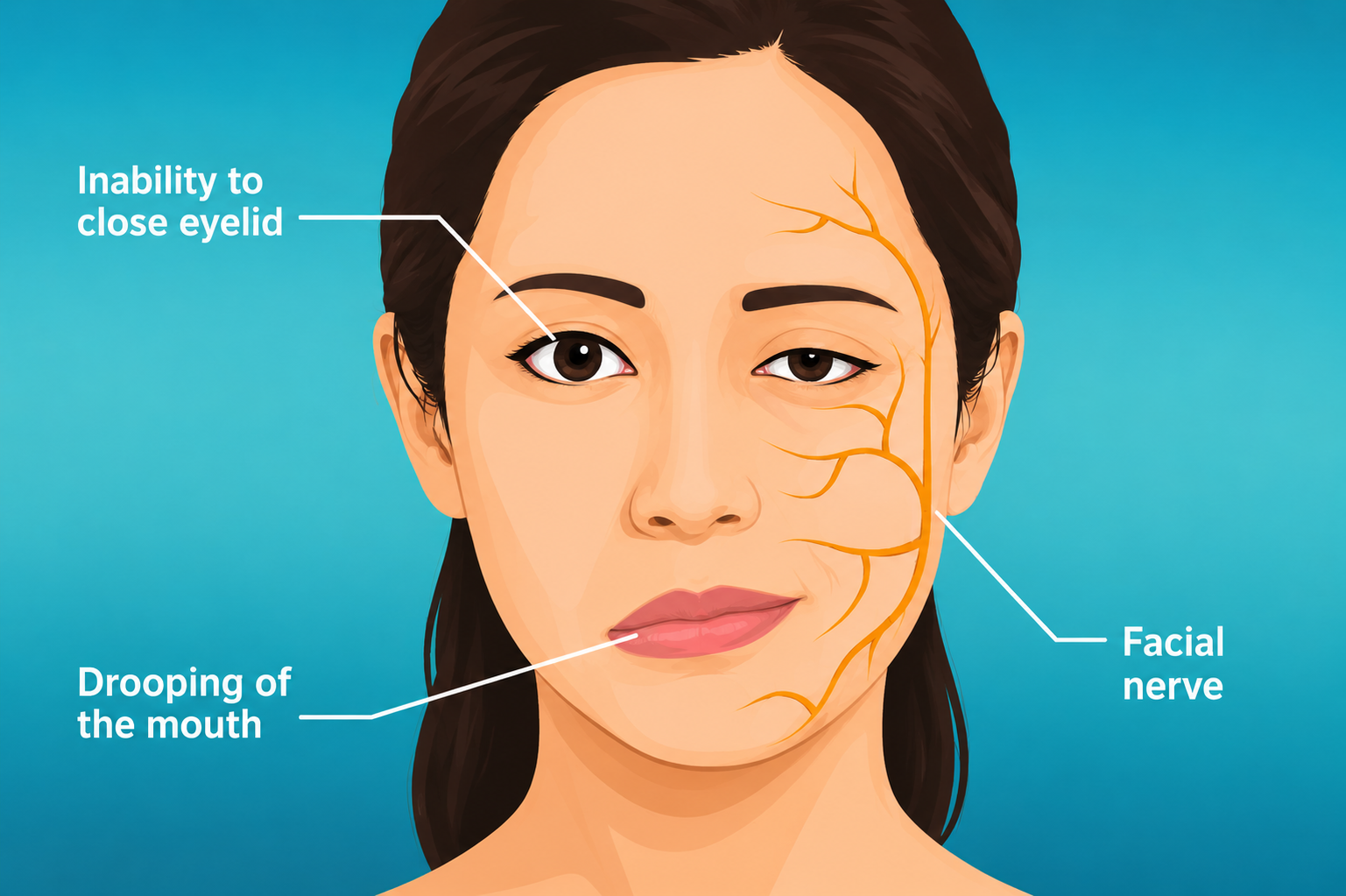
Physiotherapy for Facial Movement & Recovery Bell’s palsy causes temporary weakness or paralysis of the muscles on one side of the face. It can affect facial expressions, eye closure and everyday facial movements.Treatment is individualised according to the stage and severity of facial weakness.
Frequently Asked Questions
Yes. Physiotherapy may help improve facial muscle control, movement, and symmetry. Treatment is tailored according to the person’s symptoms and stage of recovery.
The appropriate time to begin physiotherapy depends on the severity and stage of the condition. A physiotherapist can assess the facial muscles and recommend suitable treatment.
Most people with Bell’s Palsy recover significantly, but recovery can vary. Some individuals may experience persistent weakness or unwanted facial movements and may benefit from rehabilitation.
Depending on the stage of recovery, treatment may include gentle facial movement exercises, relaxation techniques, facial coordination exercises, and strategies to improve controlled facial movements.
Yes. Home physiotherapy can be convenient for people recovering from Bell’s Palsy. A physiotherapist can assess the patient and provide a personalized rehabilitation program that can be performed safely at home.