About STROKE
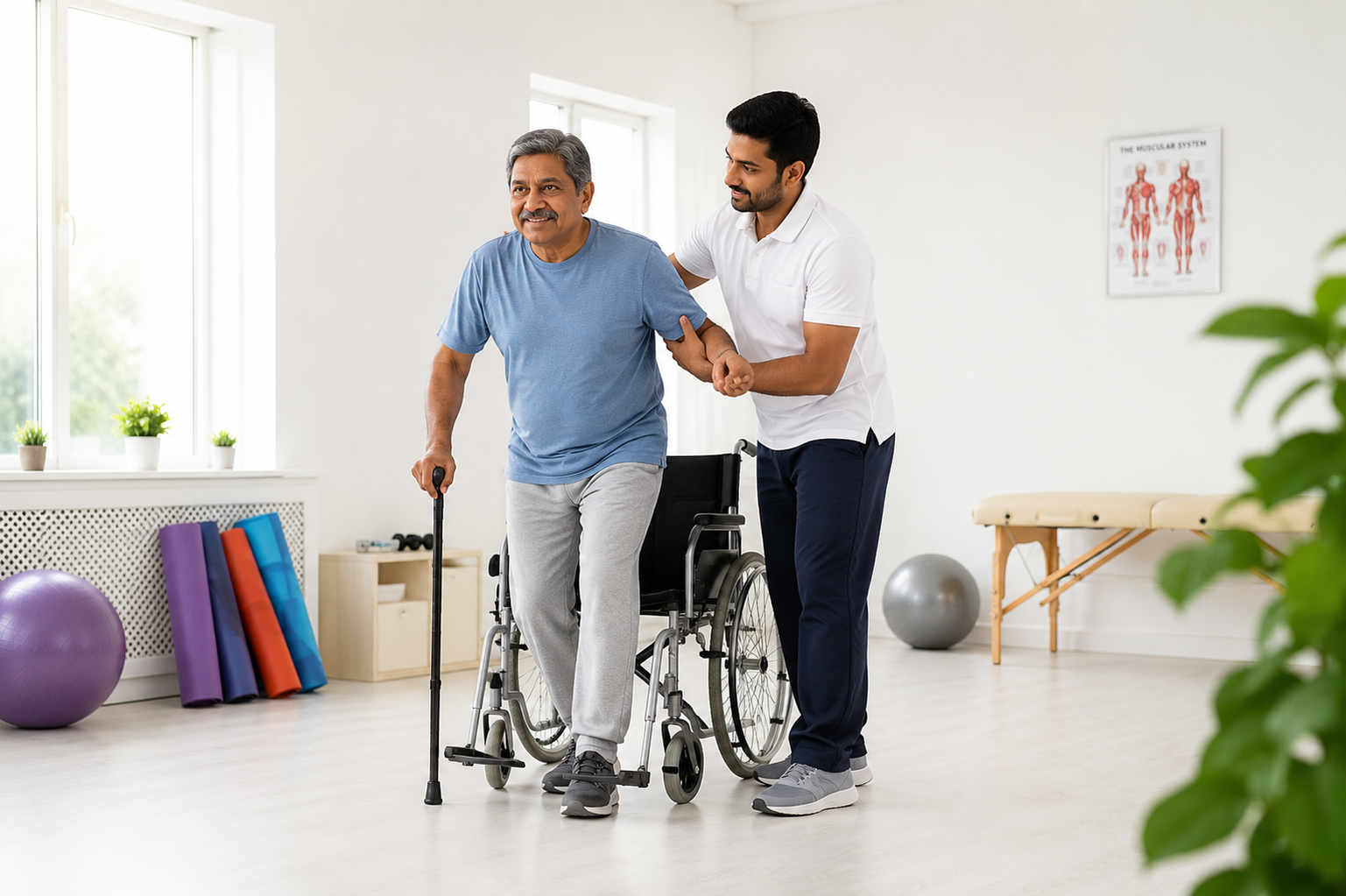
A stroke can affect movement, balance, strength, coordination and everyday activities. Recovery is different for every person, but physiotherapy plays an important role in helping you regain function and independence. Treatment may include movement training, strengthening, balance exercises, gait training and functional rehabilitation, based on your individual needs. With regular rehabilitation and the right guidance, physiotherapy can support safer movement and greater independence after stroke.
Frequently Asked Questions
Yes. Physiotherapy can help stroke survivors improve strength, balance, coordination, mobility, and independence in daily activities. Treatment is tailored to the individual’s condition and recovery goals.
Physiotherapy can often begin once the patient is medically stable, sometimes as early as the hospital stage. Starting rehabilitation early, when appropriate, can help prevent complications and support recovery.
Recovery varies from person to person. Some people may improve within weeks, while others require rehabilitation for several months or longer. The duration depends on the severity of the stroke and the individual’s response to treatment.
Yes. Physiotherapy can work on muscle strength, balance, coordination, weight shifting, and walking patterns to help improve mobility and make walking safer.
Yes. Home physiotherapy can be useful for stroke survivors who have difficulty travelling to a clinic. A physiotherapist can assess the patient at home and create a rehabilitation program based on their mobility, safety, and daily needs.