
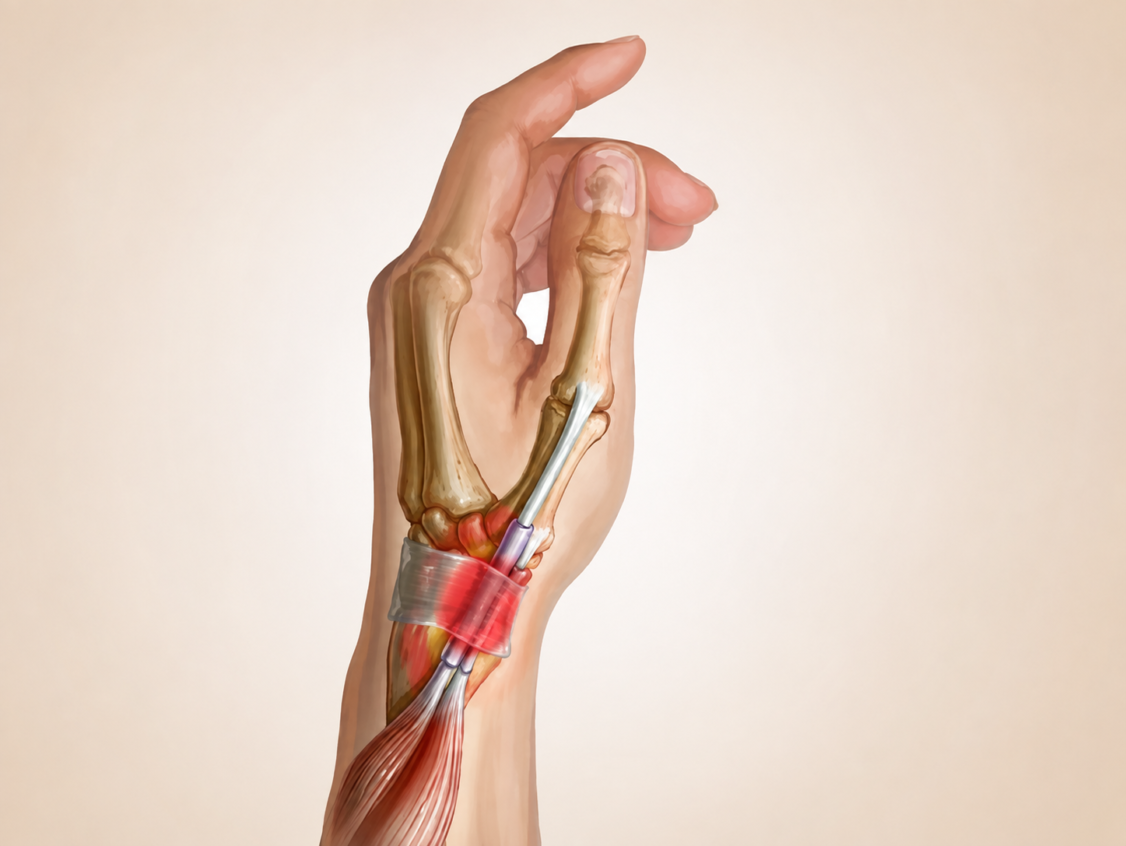
About De Quervain’s Tenosynovitis
De Quervain’s tenosynovitis is a condition that causes pain and tenderness on the thumb side of the wrist. It affects the tendons responsible for moving the thumb away from the hand and extending it. These tendons pass through a narrow tunnel near the wrist, and when they become irritated or the surrounding tendon sheath thickens, movement of the thumb can become painful. The condition commonly develops due to repetitive thumb and wrist movements, prolonged gripping, lifting, or twisting activities. It is frequently seen in new parents who repeatedly lift and carry their babies, as well as in individuals who perform repetitive hand movements at work or during sports. Although daily activities such as lifting a cup, opening a jar, turning a key, or holding a baby can become uncomfortable, most people recover successfully with appropriate physiotherapy, activity modification, and gradual rehabilitation.
Did You Know?
De Quervain’s tenosynovitis is often called “mother’s thumb” or “baby wrist.” This nickname comes from the number of new parents who develop the condition while repeatedly lifting, feeding, and carrying their babies. Fortunately, early physiotherapy, simple activity modifications, and progressive exercises can help most people recover successfully.
Frequently Asked Questions
Lifting a baby often places the wrist in a bent position while the thumb is stretched away from the hand. Repeating this movement many times throughout the day can overload the thumb tendons and contribute to De Quervain’s tenosynovitis.
Most people improve with physiotherapy, activity modification, and appropriate conservative treatment. Surgery is usually considered only when symptoms remain severe despite adequate non-surgical management.
A thumb splint may help reduce pain during the early stages of recovery by limiting excessive thumb movement. Your physiotherapist can advise whether splinting is appropriate for your specific condition.
In many cases, yes. Temporary modifications to work tasks may be recommended to reduce stress on the affected tendons while they recover.
Many people begin improving within 4 to 8 weeks, although recovery varies depending on symptom duration, activity demands, and adherence to rehabilitation.