About Frozen Shoulder (Adhesive Capsulitis)
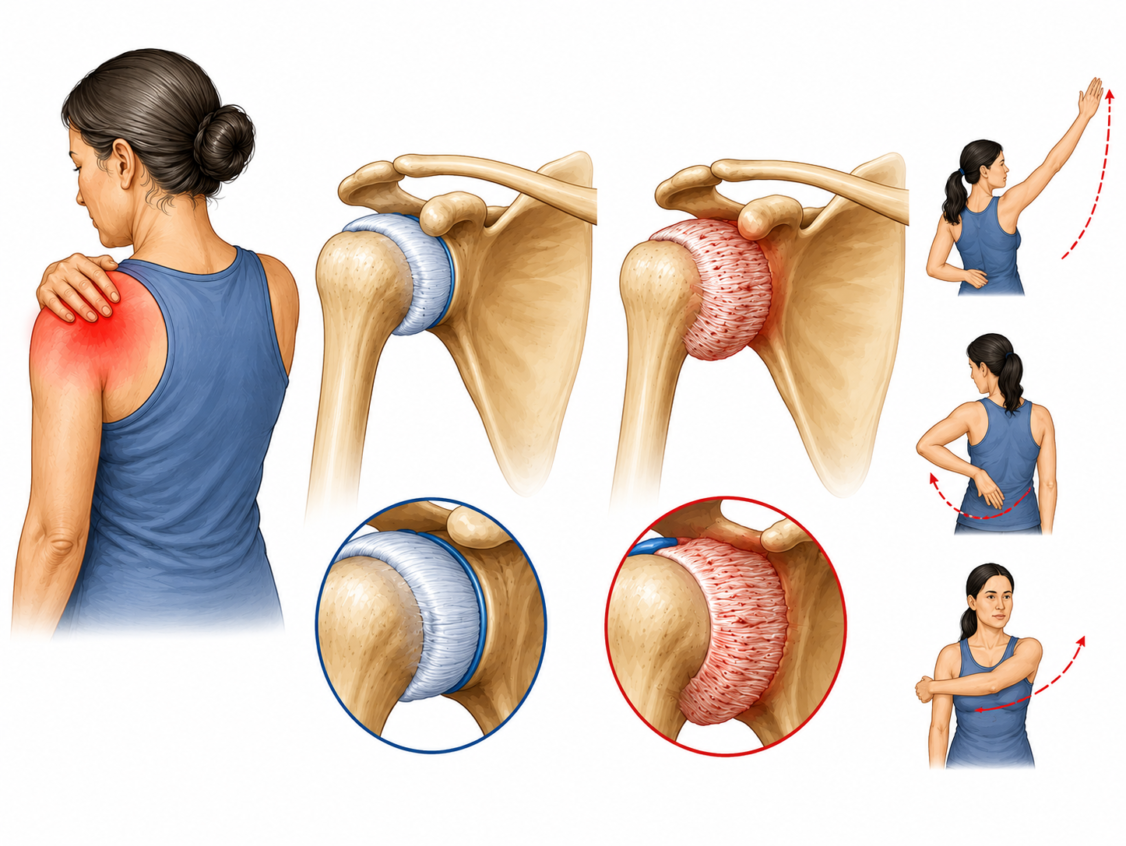
Frozen shoulder, medically known as adhesive capsulitis, is a condition that causes pain, stiffness, and progressive loss of movement in the shoulder joint. It occurs when the capsule surrounding the shoulder joint becomes inflamed, thickened, and tight, making it difficult and painful to move the shoulder normally. Unlike a muscle injury, frozen shoulder affects the joint capsule itself. Over time, the capsule becomes less flexible, restricting movement in almost every direction. The condition typically develops gradually and progresses through different stages before eventually improving. Frozen shoulder commonly affects adults between 40 and 60 years of age and is seen more frequently in women than men. People with diabetes, thyroid disorders, prolonged shoulder immobilisation, or previous shoulder injuries have a higher risk of developing this condition. Although frozen shoulder often improves with time, recovery can take several months to over a year. Early physiotherapy plays an important role in maintaining movement, reducing pain, and helping individuals regain shoulder function throughout the recovery process.
Did You Know?
People with diabetes are significantly more likely to develop frozen shoulder than the general population. Diabetes is associated with changes in connective tissues that can affect the shoulder capsule, making early recognition and timely rehabilitation especially important.
Frequently Asked Questions
No. Frozen shoulder affects the joint capsule and causes significant stiffness along with pain. A rotator cuff injury primarily involves the muscles or tendons around the shoulder and usually causes weakness rather than marked restriction of passive movement.
Many people experience gradual improvement over time, but recovery can take many months. Physiotherapy helps maintain movement, reduce pain, improve function, and minimise long-term stiffness during the recovery process.
Yes, but exercises should be appropriate for your stage of recovery. Overly aggressive stretching can increase pain, while gentle, guided exercises prescribed by your physiotherapist can support recovery.
Recovery varies, but many individuals experience significant improvement within 12 to 24 months. Some people recover sooner, while others may have mild residual stiffness.
Most people improve with conservative treatment, including physiotherapy. Surgery or other procedures may be considered in selected cases when symptoms remain severe despite appropriate non-surgical management.